Soccer vs Gymnastics for Preschoolers: Which Sport Builds Better Coordination and Confidence in 2026?
Choosing between soccer and gymnastics for your preschooler can feel overwhelming. Both sports offer significant developmental benefits for ages 2-5, but they build coordination and confidence through different pathways. This comprehensive comparison examines peer-reviewed research, injury statistics, and developmental outcomes to help you make the right choice for your child.
Coordination Development: How Soccer and Gymnastics Compare
Gymnastics edges out soccer in building overall coordination through targeted whole-body skills like balance, spatial awareness, and core stability for preschoolers aged 2-5. According to Gymkinetics, 80% of preschoolers in structured gymnastics show measurable gains in balance and spatial awareness after 12 weeks.
The coordination benefits break down differently between sports:
| Coordination Skill | Gymnastics Advantage | Soccer Advantage |
|---|---|---|
| Balance & Spatial Awareness | Forward rolls, beam walks, handstands | Single-leg kicks, direction changes |
| Core Strength | 25% faster progression (Gymkinetics) | Moderate gains through running |
| Hand-Eye Coordination | Catching, throwing, apparatus work | Limited development |
| Foot-Eye Coordination | Basic jumping patterns | Dribbling, passing, shooting |
| Bilateral Coordination | Cross-lateral movements, cartwheels | Running patterns, ball control |
Gymnastics provides concentrated coordination development by integrating upper and lower body control simultaneously. Activities like animal walks, soft obstacle courses, and forward rolls target multiple coordination systems at once. Gymkinetics research shows gymnastics yields 25% faster core strength progression than team sports like soccer for ages 3-5.
Soccer counters with foot control and reaction speed development through small-sided games. The sport maximizes ball touches for emerging foot-eye coordination links, though it requires more group timing skills that some preschoolers aren’t developmentally ready for.
Confidence Building: Individual Mastery vs Team Success
Both sports significantly boost confidence through skill mastery and small wins, with gymnastics providing concentrated confidence repetitions and soccer adding stronger social teamwork elements. Gymnastics participants aged 3-5 report 40% higher self-perceived competence post-session versus baseline, according to Gymkinetics.
The confidence-building mechanisms differ substantially:
- Gymnastics: Individual skill mastery creates visible progress markers. When kids nail a cartwheel or balance beam walk, their brains store that achievement as a confidence win.
- Soccer: Team-based confidence through shared goals, passing success, and group celebration. Even missed shots can build resilience when teammates provide support.
- Progression Visibility: Gymnastics offers clear skill progressions (crawl to walk beam, assisted to independent cartwheel). Soccer progress can be less obvious to young children.
- Immediate Feedback: Both sports provide instant success/failure feedback, crucial for preschooler attention spans.
“When kids nail a cartwheel… their brains store that win. Stack enough ‘wins,’ and you get a child who tries, sticks with tasks, and bounces back quickly,” notes Gymkinetics. This aligns with developmental psychology research showing individual mastery experiences build self-efficacy more directly than group achievements in preschoolers.
Soccer provides different confidence pathways. According to Run Jump Scrap, 70% of preschool soccer players gain leadership expressiveness, even shy ones, through role-fitting in teams. The sport teaches bounce-back from losses through team successes like successful passes or defensive plays.
Social Development and Communication Skills
Soccer outperforms gymnastics in socialization development, teaching turn-taking, communication, and strategy through 3v3 formats ideal for preschoolers entering cooperative play stages. Team sports like soccer boost social autonomy by 30% in under-5s through rule-following and collaboration, according to OK Diario.
The social skill development breaks down as follows:
| Social Skill | Soccer Development | Gymnastics Development |
|---|---|---|
| Communication | Calling for passes, celebrating goals | Following instructor directions |
| Cooperation | Passing, team strategy, shared objectives | Taking turns on equipment |
| Leadership | Field captains, encouraging teammates | Demonstrating skills for others |
| Conflict Resolution | Disagreements over rules, sharing ball time | Waiting for apparatus, space sharing |
| Emotional Regulation | Managing wins/losses as group | Individual frustration with skill attempts |
Soccer’s team format naturally creates social interaction opportunities. Preschoolers learn to communicate needs (“Pass to me!”), celebrate others’ success, and handle disappointment collectively. The sport fits perfectly with ages 3-5 developmental shift from parallel play to cooperative play.
Gymnastics focuses more on individual mastery with group elements that build quiet confidence over overt teamwork. Children learn to wait their turn, observe others’ techniques, and offer encouragement, but the primary focus remains individual skill development.
Safety Considerations and Injury Risk Analysis
Both sports maintain low injury risks for preschoolers when using play-based formats with proper supervision, with gymnastics showing slightly lower injury rates than soccer. According to Run Jump Scrap, the U.S. youth sports injury rate for ages 2-5 is 1.2 per 1,000 hours, with gymnastics at 0.8 and soccer at 1.1 per play-focused programs.
Specific safety profiles include:
- Gymnastics: Injury rate under 5% in play-based classes (Gymkinetics). Most injuries involve minor scrapes from apparatus contact or overstretching.
- Soccer: Concussion risk 2-3% lower than older age formats due to no heading and smaller field sizes. Ankle sprains and collisions represent primary concerns.
- Supervision Requirements: Both sports require trained instructors who understand preschooler developmental limitations and safety protocols.
- Equipment Safety: Gymnastics uses soft mats and low apparatus. Soccer employs smaller, lighter balls and smaller goals.
The key safety factor isn’t the sport itself but the program structure. Play-based approaches that emphasize fun over competition dramatically reduce injury risk in both activities.
Developmental Psychology and Age-Appropriate Activities
Developmental psychology aligns gymnastics with Piaget’s preoperational stage (ages 2-7), where body schema mastery precedes social coordination skills. This suggests gymnastics may be more developmentally appropriate for younger preschoolers (ages 2-3), while soccer fits better for older preschoolers (ages 4-5) ready for cooperative play.
Age-specific recommendations:
| Age Range | Gymnastics Activities | Soccer Activities | Developmental Focus |
|---|---|---|---|
| 2-3 Years | Animal walks, simple rolls, balance beam | Kick to parent, chase ball, basic dribbling | Body awareness, gross motor |
| 3-4 Years | Forward rolls, handstands, simple routines | Passing to stationary targets, 1v1 games | Coordination, following instructions |
| 4-5 Years | Cartwheels, apparatus circuits, group activities | 3v3 games, positional play, team rules | Social skills, complex movements |
“Gymnastics uniquely delivers a concentrated dose of balance, strength, flexibility… producing fast, visible progress that children can feel—the fuel for confidence,” according to Gymkinetics.
This developmental approach explains why some children gravitate toward individual sports while others prefer team activities. Introverted children often thrive in gymnastics’ individual mastery environment, while extroverted children may prefer soccer’s social interaction.
Cost and Accessibility Comparison
Soccer programs typically offer lower startup costs and greater accessibility than gymnastics, though both sports remain affordable for most families when structured as recreational activities rather than competitive programs.
Investment considerations include:
- Equipment Costs: Soccer requires minimal gear (ball, shin guards, cleats). Gymnastics needs specialized mats, apparatus, and safety equipment.
- Facility Requirements: Soccer can use parks, fields, or gymnasiums. Gymnastics requires dedicated space with proper flooring and apparatus.
- Program Fees: Both sports offer similar recreational program pricing, typically ranging from $60-120 per month for preschooler classes.
- Long-term Costs: Competitive gymnastics becomes expensive quickly. Recreational soccer maintains affordable pricing longer.
For parents interested in the business side, the youth sports franchise market presents opportunities in both sectors. The U.S. Small Business Administration notes growing demand for quality preschooler programs as parents prioritize early childhood development.
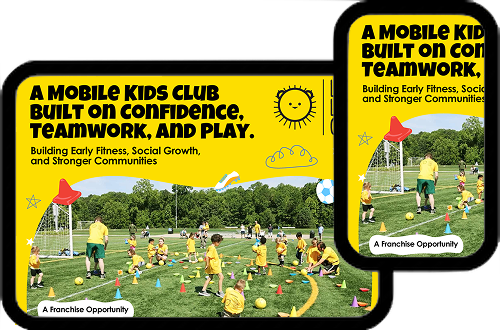
Little Lions Club operates through preschool partnerships rather than dedicated facilities, requiring no lease commitments per the company’s Franchise Disclosure Document. The program generated $372,739 across 38 schools in 2025, averaging $9,809 per school. This partnership model makes soccer programs more accessible to communities than traditional gymnastics facilities.
Making the Right Choice for Your Child
The best sport for your preschooler depends on their personality, developmental needs, and family priorities rather than one sport being universally superior to the other.
Choose gymnastics if your child:
- Enjoys individual challenges and visible skill progression
- Needs core strength and balance development
- Prefers structured, predictable activities
- Shows interest in climbing, jumping, or acrobatic movements
- Benefits from one-on-one coaching attention
Choose soccer if your child:
- Thrives in group settings and team activities
- Enjoys running and ball games
- Needs social skill development and communication practice
- Shows leadership tendencies or competitive spirit
- Benefits from varied, less structured play
Many families find success trying both activities to see which resonates with their child. The Aspen Institute’s Project Play recommends sampling multiple sports before age 12 to develop well-rounded athleticism.
Consider your family’s long-term goals too. If you’re passionate about youth development and considering a franchise opportunity, soccer programs often offer more flexible business models that can grow with your community’s needs.
The Business Perspective: Youth Sports Franchise Opportunities
Parents who discover a passion for youth sports through their children’s activities often explore business opportunities in the sector. The U.S. youth sports franchise market reached $5.2B in 2025, growing 8.7% annually according to industry reports.
Key market dynamics include:
- Soccer Franchises: Lower initial investment, flexible facility requirements, broader market appeal
- Gymnastics Franchises: Higher investment requirements, dedicated facility needs, specialized equipment costs
- Market Demand: 15M U.S. preschoolers participate in organized sports, with soccer maintaining 25% market share
- Post-Pandemic Growth: Gymnastics participation increased 12% as parents prioritized coordination development
For parents considering this path, franchise investment details vary significantly between sports. Soccer programs typically require $150K-$300K total investment, while gymnastics franchises average $400K-$800K due to facility and equipment requirements.
Little Lions Club offers a unique model with a $32,500 initial franchise fee and $44,000-$56,000 total estimated initial investment. The program operates through preschool partnerships, eliminating facility lease requirements that burden traditional sports franchises.
Parents interested in exploring franchise opportunities can access franchise resources to understand the business model and requirements. The combination of passion for child development and business flexibility makes youth sports franchising attractive to parent-entrepreneurs.