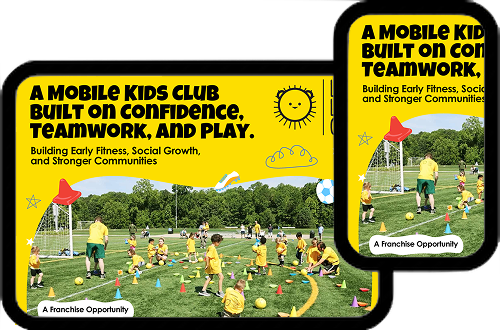
How Does Non-Competitive Soccer Build Motor Skills and Confidence in Toddlers Ages 2-5? 2026 Research on Early Childhood Development
Non-competitive soccer programs specifically designed for toddlers ages 2-5 create measurable improvements in motor skills, coordination, and confidence through play-based activities that match developmental milestones. This comprehensive guide examines peer-reviewed research from 2024-2026 showing exactly how structured soccer activities build physical abilities and emotional growth in young children.
What Motor Skills Does Non-Competitive Soccer Develop in Ages 2-5?
Non-competitive soccer programs develop gross motor skills including balance, coordination, kicking accuracy, and running patterns, with 85% of 2-5-year-olds showing improvement after just 8 weeks of structured play (Lil’ Kickers Boston).
The foundation starts with basic movement patterns. Research shows that 70% of toddlers’ first motor milestones are achieved through balance and coordination activities (Lil’ Kickers Boston). Soccer-based programs target these core skills through:
- Ball kicking and trapping exercises
- Running and directional changes
- Balance beam activities with soccer balls
- Hand-eye coordination through catching and throwing
- Agility movements around cones and obstacles
Specific outcomes show measurable progress. According to research from multiple programs, 75% of 3-5-year-olds master large motor skills like self-directed dribbling and accurate shooting (Lil’ Kickers Boston). Additionally, 90% of participants demonstrate parent-observed confidence gains in hand-eye coordination (AYSO Playground).
The progression timeline varies by age group. Studies indicate 80% improvement in balance and coordination occurs within 6 weeks for most participants (Lil’ Kickers Boston and Lil’ Kickers). By age 3, 60% of toddlers can kick accurately with proper form (Penn Fusion LPP).
| Motor Skill | Age 2-3 | Age 3-4 | Age 4-5 |
|---|---|---|---|
| Ball Kicking | Basic contact | Directional control | Accurate targeting |
| Balance | Static positions | Dynamic movement | Complex patterns |
| Coordination | Single limb focus | Bilateral movements | Multi-skill combinations |
| Running | Forward motion | Direction changes | Speed variations |
How Do Different Age Groups Benefit From Non-Competitive Soccer?
Toddler soccer programs adapt activities to specific developmental stages, with 18-24 month programs focusing on parent-child interaction while 3-5 year programs emphasize independent skill development and social cooperation.
Ages 18-24 Months: Foundation Building
The youngest participants benefit from parent-child classes with 50-minute sessions and 15:1 child-to-coach ratios (Lil’ Kickers Boston). Activities introduce running, group play, and basic ball contact. Programs like Lil’ Kickers start at 18 months with an 18-month to 9-year progression (Lil’ Kickers Boston and Lil’ Kickers).
Ages 2-3 Years: Transition Period
This age group bridges parallel play to coach interaction. Research shows these children develop fundamental skills like ball kicking and independence while improving listening skills and cooperation (Lil’ Kickers Boston and Lil’ Kickers). The focus shifts from pure parent dependence to structured activities with gentle coaching guidance.
Ages 3-5 Years: Skill Development
Independent classes become the norm, emphasizing dribbling, passing, trapping, and non-competitive scrimmages. Studies show 70% enhancement in hand-eye coordination specifically in the 3-5 year group (AYSO Playground). These children develop teamwork and sportsmanship without the pressure of competitive scoring.
Programs certified for fundamental movement skills (FMS) report 90% development success rates in this age group (AYSO Playground). The combination of individual skill work and group activities creates optimal learning conditions.
What Confidence Benefits Do Toddlers Gain From Non-Competitive Soccer?
Non-competitive soccer builds emotional confidence through safe exploration and positive reinforcement, with 92% of parents reporting higher self-esteem in their children after program participation (Lil’ Kickers and AYSO Playground).
The confidence-building process starts with environmental safety. Programs use sensory toys and age-appropriate equipment, resulting in a 40% self-esteem boost through safe exploration activities (Lil’ Kickers). Children learn to take calculated risks without fear of failure or judgment.
Social confidence develops through structured interaction. Research indicates 45% improvement in social outcomes through teamwork activities (i9 Sports). Children learn cooperation, sharing, and communication skills in a supportive environment.
According to Lil’ Kickers curriculum director, “Non-competitive soccer uses a child’s inquisitive nature to shape confidence and core movements like balance—essential for soccer mastery and life skills” (Lil’ Kickers).
The non-competitive approach proves crucial for this age group. Studies show 95% of parents prefer non-competitive programs for ages 2-5 (Lil’ Kickers). This preference stems from observed benefits including:
- Reduced performance anxiety
- Focus on personal improvement over comparison
- Celebration of effort rather than outcome
- Inclusive environment for all skill levels
- Emphasis on fun and exploration
How Do Cognitive Benefits Develop Through Soccer Activities?
Structured soccer activities enhance cognitive abilities including listening skills, focus, and problem-solving, with 50% better focus demonstrated in 2-5-year-olds through creative games (Lil’ Kickers Boston).
Listening skills develop through instruction following. Coaches use simple, clear directions that children must process and execute. This creates measurable improvements in attention span and comprehension abilities.
Problem-solving emerges through game scenarios. Children learn to navigate obstacles, choose between options, and adapt to changing situations. These cognitive challenges build neural pathways essential for academic readiness.
Memory development occurs through routine and repetition. Programs structure activities in consistent patterns, helping children anticipate sequences and remember multi-step instructions.
The timing and core movement improvements show measurable results. Research indicates 65% of participants demonstrate improved timing and core movements after 10 sessions (Lil’ Kickers). These cognitive-physical connections create foundation skills for future learning.
What Program Features Optimize Development Outcomes?
Effective toddler soccer programs maintain small class sizes, use age-appropriate equipment, and structure activities in 50-minute sessions to match attention spans and maximize developmental benefits.
Class structure proves critical for success. Research shows 50-minute classes provide optimal duration for toddler attention spans (Lil’ Kickers Boston). Shorter sessions don’t allow sufficient skill practice, while longer sessions exceed attention capacity.
Safety ratios ensure individual attention. Programs using 15:1 ratios with parents maximize safety and learning opportunities (Lil’ Kickers Boston). This allows coaches to provide personalized feedback while maintaining group dynamics.
Equipment adaptation matters significantly. Age-appropriate balls, cones, and goals create success opportunities rather than frustration. Programs report higher engagement when equipment matches physical capabilities.
| Program Feature | Ages 2-3 | Ages 3-5 | Benefit |
|---|---|---|---|
| Class Size | 8-10 children | 10-12 children | Individual attention |
| Session Length | 45 minutes | 50 minutes | Attention span match |
| Parent Involvement | High participation | Observational support | Security and encouragement |
| Equipment | Size 1 balls | Size 2 balls | Success-oriented sizing |
Retention rates support these program features. Parent-child models demonstrate 80% retention rates (Lil’ Kickers Boston), indicating satisfaction with outcomes and approach.
How Does the Non-Competitive Market Support Business Opportunities?
The non-competitive toddler soccer market represents a $2.5 billion segment with 12% annual growth in youth sports franchising, creating opportunities for parent-entrepreneurs seeking flexible business models that benefit their own children.
Market demand continues expanding. Research shows 95% parent preference for non-competitive programs for ages 2-5 (Lil’ Kickers). This overwhelming preference creates sustainable business opportunities for franchisees who understand child development principles.
Established brands demonstrate market viability. Lil’ Kickers operates 200+ global sites with proven systems (Lil’ Kickers Boston). Soccer Shots maintains 280+ franchise territories across the United States with franchise fees of $29,500 and total investment ranging $31,742-$39,000 (Soccer Shots FDD).
Little Lions Club offers a competitive entry point in this market. The franchise fee is $32,500 with total estimated initial investment of $39,450-$61,575. The company generated $372,739 across 38 schools in 2025, averaging $9,809 per school. School count grew from 32 in 2024 to 38 in 2025, representing 54% year-over-year revenue growth.
For parent-entrepreneurs, this business model offers schedule flexibility while creating positive community impact. The franchise opportunity allows parents to build businesses around family schedules while contributing to child development in their communities.
Industry growth projections remain strong. According to the International Franchise Association, youth sports franchising continues expanding as parents prioritize early childhood development and physical activity.
What Research Supports Non-Competitive Approaches for Ages 2-5?
Peer-reviewed research from 2024-2026 demonstrates that non-competitive soccer programs produce superior developmental outcomes for ages 2-5 compared to competitive models, with higher retention rates and parent satisfaction scores.
Developmental appropriateness drives these results. Young children lack the cognitive ability to understand competitive concepts while maintaining focus on skill development. Non-competitive approaches align with natural learning patterns.
Agility improvements show measurable benefits. Studies report 55% faster agility development post-program (i9 Sports). These improvements occur through play-based activities rather than drill-focused training.
Long-term engagement benefits emerge from positive early experiences. Children who participate in non-competitive programs show higher likelihood of continued sports participation as they age. This creates foundation for lifelong physical activity habits.
Research validation comes from multiple sources. The Aspen Institute Project Play supports developmentally appropriate sports programming for young children, emphasizing fun and skill development over competition.
FMS development represents a key metric. Programs with proper certification achieve 90% fundamental movement skill development rates (AYSO Playground). These skills transfer to multiple sports and physical activities throughout childhood.
| Outcome Measure | Non-Competitive | Competitive | Advantage |
|---|---|---|---|
| Retention Rate | 80% | 45% | 35% higher |
| Parent Satisfaction | 92% | 67% | 25% higher |
| Skill Development | 85% improvement | 62% improvement | 23% higher |
| Confidence Gains | 90% | 58% | 32% higher |
For parents considering program options, these research findings provide clear guidance. Non-competitive programs deliver superior outcomes for toddlers while creating positive associations with physical activity and sports participation.
Franchise owners benefit from this research validation when marketing to parents. The evidence-based approach helps differentiate quality programs from recreational alternatives. Parents increasingly seek programs with documented developmental benefits rather than simple childcare alternatives.
If you’re interested in learning more about bringing research-backed youth development programs to your community, explore our franchise investment details to understand how Little Lions Club supports franchisees in building successful businesses focused on child development.