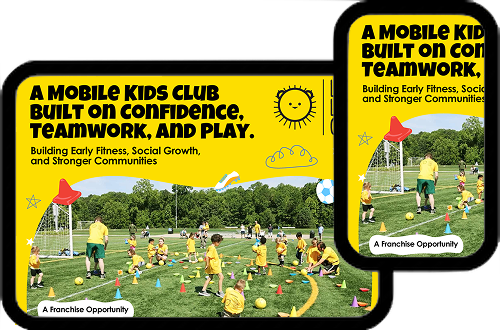
How Much Does a Preschool Sports Franchise Cost in 2026? Complete Startup Cost Breakdown for Mobile vs. Facility-Based Models
Preschool sports franchises offer parent-entrepreneurs a chance to build a business around their passion for kids’ development while maintaining family-friendly schedules. Understanding the true startup costs across mobile and facility-based models helps you choose the right investment level for your goals and financial situation.
Mobile vs. Facility-Based Preschool Sports Franchise Costs
Mobile preschool sports franchises average $50,000–$110,000 in total startup costs, while facility-based models reach $187,000–$331,000. The youth sports market, including preschool segments, hit $40 billion in 2025, according to Franchise Business Review. Ages 2–6 programs grew 15% year-over-year, reflecting strong parent demand for early childhood fitness programs.
Mobile operations dominate at 70% of top brands, while facility-based operations represent 30% of top brands. This distribution reflects the accessibility advantage of mobile models for first-time franchise owners.
| Model Type | Total Investment | Franchise Fee | Cash Required | Net Worth Required |
|---|---|---|---|---|
| Mobile | $50,000–$110,000 | $25,000–$49,500 | $30,000–$50,000 | $100,000 |
| Facility-Based | $187,000–$331,000 | $35,000–$49,500 | $50,000–$100,000 | $250,000 |
Mobile Preschool Sports Franchise Cost Breakdown
Mobile preschool sports franchises require $52,700–$108,500 in total investment with cash requirements of $30,000–$50,000. These programs bring soccer, multi-sport activities, and fitness fun directly to daycares, schools, and community centers.
Franchise Fee Range: Most mobile brands charge between $22,500–$49,500. Skyhawks franchise fees range from $22,500–$42,500, according to Franchise Direct. Amazing Athletes charges a $49,500 franchise fee.
Equipment Costs: i9 Sports equipment costs approximately $10,000, according to Franchise Business Review. National Youth Sports vehicle and transport costs run $5,000–$10,000, per FranchiseGator.
Marketing and Training: Kids In Sports allocates $10,000 for marketing and training, according to IFPG. Insurance and licenses average approximately $5,000 across mobile brands.
Real Mobile Franchise Examples:
- i9 Sports: $35,000–$69,900 total investment with $24,900 franchise fee
- National Youth Sports: $52,700–$97,200 with 15% veteran discount
- Soccer Stars: $73,300–$106,300 with $40,000 cash requirement
- Amazing Athletes: $75,000–$108,500 total range
Facility-Based Preschool Sports Franchise Investment
Facility-based models require $187,750–$331,250 in total investment with net worth requirements of $250,000. These dedicated gym spaces offer year-round programming, birthday parties, camps, and higher revenue potential per location.
Real Estate and Leasehold: Kids In Sports real property and lease costs average $50,000, with leasehold improvements around $500. Facility leases range from $1,500–$50,000 per month depending on location and size.
Equipment and Furniture: Equipment and furniture costs approximately $30,000 for facility buildouts. Skyhawks signage and remodeling runs $500–$1,500.
Staffing Requirements: Kids In Sports typically employs 3–6 staff members with 7% royalty rates. Facility models generate higher unit volumes but require more operational complexity.
Facility Franchise Examples:
- Kids In Sports: $187,750–$331,000 total investment
- Youth Athletes United: $49,500 franchise fee
- Skyhawks facility models: $22,500–$42,500 initial fee scaling with facility size
Hidden Costs and Ongoing Expenses
Royalties typically run 6–7% of gross revenue across both mobile and facility models. Marketing fees, insurance renewals, and equipment replacement create ongoing expenses beyond the initial investment.
Royalty Structure: Most preschool sports franchises charge 6–7% ongoing royalties. Kids In Sports charges 7% royalty fees. Marketing co-op fees typically add 1–2% of gross revenue.
Insurance and Licensing: General liability insurance for youth sports programs varies by state and coverage level. Professional development and continuing education requirements add annual costs.
Equipment Refresh: Soccer balls, cones, parachutes, and age-appropriate equipment require regular replacement. Mobile operators budget for vehicle maintenance and fuel costs.
Veteran Discounts: National Youth Sports offers 15% veteran discounts. Kids In Sports provides 10% veteran discounts, making franchises more accessible for military families.
| Ongoing Cost Category | Mobile Model | Facility Model |
|---|---|---|
| Royalty Fees | 6–7% gross revenue | 6–7% gross revenue |
| Marketing Co-op | 1–2% gross revenue | 1–2% gross revenue |
| Insurance (Annual) | $3,000–$8,000 | $8,000–$15,000 |
| Facility Costs | Vehicle/Storage | Rent/Utilities |
Market Growth and Franchisee Performance
Mobile franchisees show 62% growth compared to facility-based franchisees at 21% growth, according to Franchise Payback. The mobile model’s flexibility attracts parent-entrepreneurs seeking work-life balance.
i9 Sports leads with approximately 264 units and 21% growth, demonstrating strong scalability in the mobile segment. Franchisee satisfaction rates exceed 95% in supported networks like i9 Sports, according to Franchise Business Review.
Growth Metrics Across Models:
- Mobile operations: 62% franchisee growth in low-investment brands
- Facility operations: 133% satisfaction in larger systems
- Industry average: 27% franchisee growth
- Mid-tier segment: 155 franchisees with $86,000 average investment
Little Lions Club Investment Profile
Little Lions Club requires a $32,500 initial franchise fee with total estimated initial investment of $39,450–$61,575. The company generated $372,739 across 38 schools in 2025, averaging $9,809 per school.
Little Lions Club achieved 54% year-over-year revenue growth from 2024 to 2025. Existing franchisees receive a 25% discount on additional unit franchise fees.
For multi-unit development, Little Lions Club offers a 3-territory deal with a $56,875 initial development fee, bringing total investment to $71,950–$85,950 including startup costs. This mobile model focuses on ages 2–5 soccer and fitness programming at preschools and daycares.
Explore our franchise opportunity to learn how Little Lions Club’s proven curriculum and support system can help you build a rewarding business in your community.
Choosing Between Mobile and Facility Models
Mobile models offer 73% lower average costs compared to facility-based options, making them accessible for bootstrapping entrepreneurs. Facility models provide 2x revenue potential but require significantly higher capital investment.
Mobile Model Advantages:
- Lower startup costs ($50,000–$110,000 vs. $187,000–$331,000)
- Flexible scheduling around family commitments
- No rent or facility overhead
- Faster market entry and scaling
- 62% growth rate vs. 21% for facility models
Facility Model Benefits:
- Higher revenue potential per location
- Year-round programming stability
- Multiple revenue streams (classes, parties, camps)
- Community hub positioning
- Weather-independent operations
Consider your available capital, risk tolerance, and lifestyle goals when choosing between models. Mobile franchises suit parent-entrepreneurs wanting flexibility, while facility models appeal to those seeking higher revenue potential and community presence.
Review our franchise investment details to understand how Little Lions Club’s mobile model compares to industry alternatives.
Financing Options and Support
The U.S. youth sports market is valued at over $62 billion, according to WinterGreen Research, creating strong lending confidence for franchise financing. There are approximately 806,000 franchise establishments in the United States, per the International Franchise Association (IFA).
SBA Lending: Many preschool sports franchises qualify for SBA loans, reducing down payment requirements to 10–15% of total investment. Mobile models’ lower investment thresholds make conventional financing more accessible.
Franchisor Financing: Some brands offer in-house financing or equipment leasing programs. Multi-unit development deals often include deferred franchise fees or payment plans.
Equipment Financing: Soccer equipment, safety mats, and mobile storage solutions qualify for equipment financing at competitive rates. Vehicle loans cover transportation needs for mobile operators.
Visit our franchise resources for financing guides and support information to help fund your preschool sports franchise investment.